All Categories
Featured
Reviewing Major 2026 Hospitality Market Trends
Evaluating Regional for National Expansion Models
Comparing Investment Models Against Market Trends
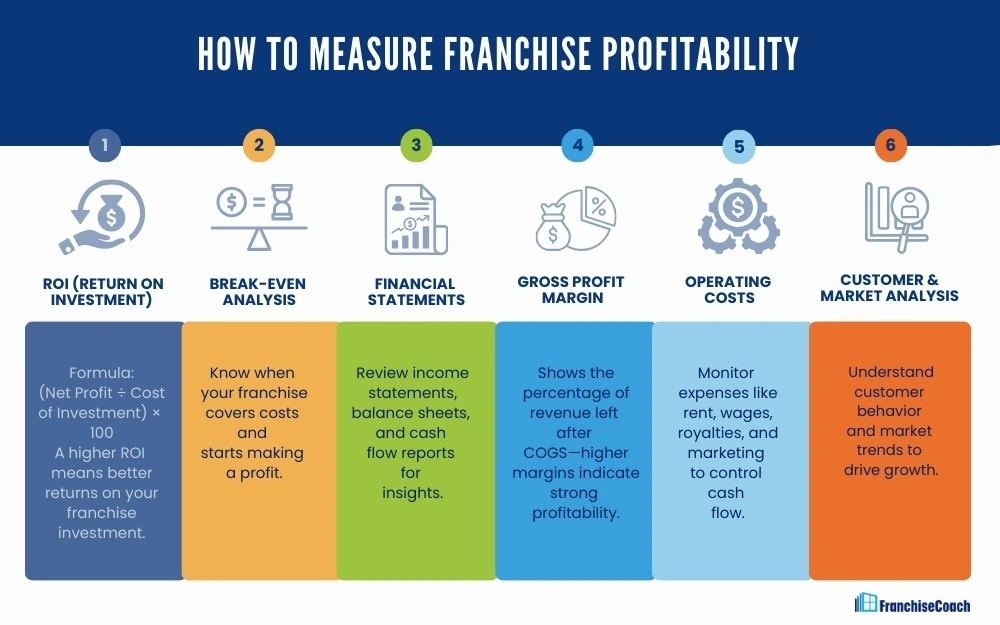
Maximising ROI in Profitable 2026 Business Ventures

Proven Tips for Restaurant Brand Expansion
AI chatbots can address frequently asked visitor questions, decreasing front desk and customer care work so these workers can focus on more complex matters and on producing significant visitor interactions. AI analysis of infrastructure and machinery can prepare for concerns, while agentic AI can manage repairs and order parts autonomously, decreasing the risk of failures and expensive emergency situation repairs.
Agentic AI can evaluate meal and beverage offerings, buyings, and profitability to instantly order new stock and suggest price or menu adaptations. According to EHL Assistant Professor Dr. Jie Yu Kerguignas, hospitality leaders "aspire to try out tools that empower workers." As EHL alumnus, Vice President at Apaleon, and hospitality tech professional, Florian Montag says, using AI is not about "robots changing people" however about producing a collective dynamic where digital assistants handle regular complexity autonomously, releasing human employees to do what they do finest: offer authentic hospitality.
AI can also support mental health and task fulfillment by minimizing repeated tasks and enabling more well balanced work. Where evaluating large sets of visitor data utilized to be labor-intensive, AI can effectively identify patterns and make actionable recommendations. As personalization has ended up being significantly essential in current years, the significance of this chance can't be understated.
AI brings hospitality marketers both brand-new opportunities and new obstacles. As an increasing number of tourists turn to AI for travel research and even to book trips, hospitality brand names require to get visibility in the LLMS that tourists use.
travelers utilized gen AI tools to prepare trips in 2025, an 11-point dive in just one year." LLM optimization will need to become an increasingly big part of their marketing mix, along with more conventional methods such as paid marketing, social networks marketing, and conventional Browse Engine Optimization (SEO). For companies with limited marketing resources, options might require to be made, as those who move now have a chance to get ahead of the competition.
On top of that, marketers can concentrate on technique as AI manages information analysis, repeated tasks, and online brand tracking. With the increased opportunities that AI brings come risks. Dr Reza Etemad-Sajadi highlights that AI needs to be carried out responsibly, with safeguards for personal privacy, data security, and ethical factors to consider. With AI taking up a growing function in hospitality processes, employee retention hinging not just on compensation however likewise on fulfilment and wellbeing, and the industry battling with high turnover and ongoing staffing lacks, embracing a people-first approach is vital.
A people-first approach isn't simply helpful for younger workers. EHL Teacher Dr Bertrand Audrin says that the service world and market must not distinguish too strongly between the particular needs of different generations. He specifies that in the end, it's the team that decides whether a leader is effective, and because sense, human-centric management is crucial to every worker, regardless of their age or profession.
And naturally, good soft abilities. - Frank Marrenbach, EHL IAB Member and CEO of Althoff Hotels In conclusion, human-centricity is a needed advancement for handling staff scarcities, shifting worker worths, and speeding up technological development. By employing and training individuals who can lead with compassion, self-awareness, and credibility, the hospitality market can develop an attractive work environment for lots of generations to come, enhancing both staff member and visitor satisfaction.
According to , 93% of international tourists state they want to make more sustainable options when traveling, and 69% wish to leave places better than when they got here. Tourists are typically likewise happy to pay more to remain at sustainable hotels. And as the requirement for eco-friendly practices is increasingly recognized and acted upon, those at the leading edge are already taking it an action even more.
Commercial Growth Through Hospitality Expansion- Markus Venzin, CEO EHL Group Where sustainability measures success by what is lowered or avoided less carbon, less water, less waste regeneration, on the other hand, concentrates on producing a favorable effect. Instead of simply balancing out harm, regenerative hospitality aims to create new worth not only for its guests but for its whole surroundings.
The hospitality market can add to regrowth in various methods: by replanting mangroves, developing biodiversity, supporting local ecological groups, or collaborating with regional ecological initiatives to develop significant guest experiences. by providing spaces to local groups, producing a hub where residents can satisfy, or inviting local artists to carry out. by training and working with locals, or dealing with regional vendors.
How to Scale a Hospitality Group Efficiently
To decrease ecological and supply chain dangers. For brand differentiation. The foodservice industry is distinctively placed to positively impact social and natural surroundings, consumer health, and the economy as it touches numerous lives every day. Hotels and restaurants can influence sourcing, create more health-conscious menus, promote social dining practices, and foster openness and development in their operations.
On top of that, they can respond to the growing need for food that is not simply pleasing however also helpful of visitors' personal and the planet's well-being. Adopting a more regenerative technique is typically seen as pricey and reserved for niche, premium brands. EHL Teacher and author of a current EHL research study around the topic, Dr.
He likewise stresses that sustainable food practices can give hospitality business of all sizes an one-upmanship by "opening brand-new profits streams, improving efficiency, and winning sustainability-minded customers." At the very same time, it is essential to acknowledge that embracing regeneration or sustainability practices isn't always simple, especially for smaller organizations. There requires to be "a balance between instant functional requirements and long-lasting environmental objectives, positioning sustainability not only as an ethical crucial but likewise as a chauffeur of competitiveness and resilience in the evolving foodservice landscape," as Dr Martin-Ross says.

Latest Posts

Reviewing Major 2026 Hospitality Market Trends
Evaluating Regional for National Expansion Models

Comparing Investment Models Against Market Trends