All Categories
Featured
Reviewing Major 2026 Hospitality Market Trends
Evaluating Regional for National Expansion Models
Comparing Investment Models Against Market Trends
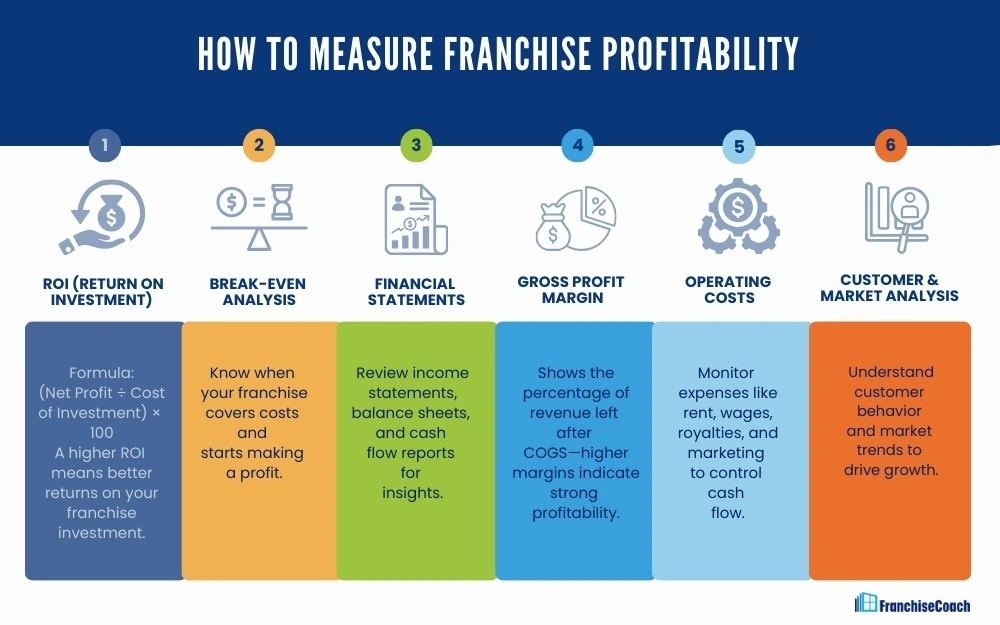
Maximising ROI in Profitable 2026 Business Ventures

Analyzing Fast Casual Sector Growth Data for 2026
Table of Contents
Rosanna Maietta President and CEO of the American Hotel & Lodging Association "As the space in between high-end tourists and the rest of the market grows, the industry is seeing clear differences in performance," Boran said. Alessandro Colantonio, primary financial investment officer at financial investment firm Gencom, used a counterpoint to that observation, saying high-end's high prices might bring industrywide benefits.
"And what that does is, it raises all the boats. If you've got a full-service or select-service property that was charging $200 a night, and a high-end item is moving into this $800-, $900- or $1,000-a-night racket, you're going to slowly inch your home up. The high rates at the high-end end raise the other segments." Colantonio included that some customers who remain in lower sector hotels likewise like to have dinner at high-end hotel restaurants.
Potential gains in the luxury sector are likewise likely to stimulate investor interest, according to Colantonio. "You'll see brand-new players starting to move into that [high-end] sector," Colantonio stated, noting that while there might be a smaller pool of buyers, the individual luxury financial investment deals would be larger, typically, than in other sectors.
Major Global Shifts in Hospitality Development
"You need to continue to take a look at your competition and see what they're doing, and you need to keep up," Colantonio said. Hotels in the U.S. are getting ready for huge events in 2026, including FIFA World Cup, which will be held throughout 11 cities, and America's 250th anniversary in July.
In general, the business is anticipating a 5% to 20% bump in June and July, though he acknowledged that forecast variety is "quite broad." Regardless of the draw of significant occasions, financial factors like tariffs, changes to the visa process and inflation are holding travel flat, said Jan Freitag, nationwide director of hospitality analytics for CoStar Group.
Corporate event planners that might usually think about one of these host cities for a conference, for example, may go elsewhere to avoid bigger crowds or inflated accommodations expenses. At the same time, if tourists concerning an event from abroad are making an unbelievable trip, "they are going to spend for the spaces," he stated.
for World Cup matches may desire to do additional taking a trip while in the nation, Busby said.
Modification is the only constant in hospitality. With guest fulfillment and experience at the core of success, hospitality companies should stay ahead of the trends forming the industry. This article checks out essential hospitality industry patterns and uses actionable insights to assist leaders make tactical investments in people, innovation, and procedures.
Can Hospitality Franchises Remain Lucrative in 2026?
In the US, RevPAR has remained mostly stagnant in 2025 while average day-to-day rate (ADR) a little increased and space occupancy declined (PWC). Europe registered growth in both RevPAR and ADR (CBRE). Global hotel performance remained mostly stagnant (The World Property Journal). Worth keeping in mind is the performance distinction in between the luxury and the economy hotel segment, with the previous showing considerable growth and the latter a decline.
The 2026 Shift in Quick-Service HospitalityThe hospitality industry is progressively embracing Artificial Intelligence (AI) to deliver tailored services, lower expenses, enhance prices, and improve functional procedures and staff member well-being. The increase of AI is likewise transforming hospitality marketing as a growing number of travelers turn to Large Language Models (LLMs) like ChatGPT and Copilot to help prepare their trips.
The United States, specifically, has suffered a decline in incoming tourism in 2025, but the FIFA World Cup happening there might offer an increase. Information leading the hospitality sector into 2026: Global Market Development: The hospitality market is anticipated to grow from $5.52 trillion in 2025 to 5.82 trillion in 2026 (Hospitality Market Growth Report 2026).
Emerging Restaurant Market Innovations Fueling 2026 Success
According to the World Travel & Tourism Council, there are around 371 million hospitality employees worldwide at the time of writing, but with the growth expected for the sector, it would need more than 460 million additional within the next decade. In this area, experts from EHL Hospitality Service School share their predictions for the crucial patterns likely to shape the international hospitality market this year.
Expert system permeates the hospitality market as tourists utilize LLMs as research assistants and business deploy AI representatives to enhance business procedures, from operations to income management and customer support. As Markus Venzin, CEO of the EHL group, states, "These self-governing systems can anticipate needs, make decisions and carry out complicated jobs, releasing up personnel to concentrate on what matters most in hospitality the human touch." The execution of AI for earnings management can cause a significant revenue boost.

Latest Posts

Reviewing Major 2026 Hospitality Market Trends

Evaluating Regional for National Expansion Models

Comparing Investment Models Against Market Trends